
GM Silencing Apple CarPlay and Android Auto
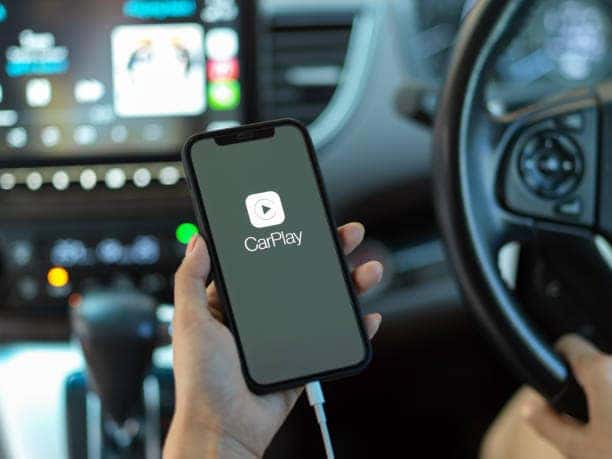
When it comes to your safety, General Motors leaves no stone unturned. When GM announced earlier in 2023 that it was phasing out Apple CarPlay and Android Auto with its latest EVs, it was met with a certain amount of confusion; why would GM go out of their way to dissolve popular features and hinder the level of phone-to-car interconnectivity that auto brands have been building towards?
Now the company has spoken out in further detail about their decision, and it comes down to one factor: safety. Below, Healdsburg Chevrolet examines the reasons behind GM’s decision and what substitute system awaits the Chevy Blazer and other EVs.
CarPlay and Auto: A Brief History
Apple CarPlay was released almost a full decade ago, in March of 2014. Its goal was to enable a car’s head unit or infotainment system to function as a display and controller for an iPhones’ iOS. Suddenly, a driver’s music, navigation systems, calls and messages could be accessed seamlessly while driving.
Android Auto debuted a year later, in March of 2015. Like its Apple counterpart, it sought to mirror phone features through vehicles’ head units and infotainment screens. Although Google initially prevented Android Auto from accessing third party mapping apps – only allowing its own apps, such as Google Maps and Waze – it relaxed these measures in 2020.
Put Down Your Phones!
So why choose to dissolve these standards, especially considering that the vast majority of Americans use Apple and Samsung phones? Those two brands currently account for 83% of the total smartphone market share.
GM insists that the primary motivating factor is safety. Tim Babbitt, GM’s head of product for infotainment, cited driver distraction caused by cell phone usage. Babbitt claims that Apple CarPlay and Android Auto both suffer from stability issues, prompting drivers to take their eyes off the road and pick up their phones again when system connections are slow or unresponsive. With built-in systems, Babbitt argues, drivers will be less likely to pick up their phones.
But the decision also factors in more than safety concerns. With company-made software, GM sees the opportunity to collect and monetize more driver data, deliver a more comprehensive user experience, and even warm up the EV battery before driving – all of which Apple and Samsung lack the full ability to do.
So… What’s Next?
It should be said that GM’s decision is not uncommon, especially amongst EV manufacturers. Both Tesla and Rivian opt for their own system in place of CarPlay or Auto, and both have been successful.
GM hopes to follow this model with their “Ultifi” infotainment software, which features a suite of Google apps such as Google Assistant and Maps, as well as popular music apps like Spotify. In particular, Google Assistant has the potential to deliver a voice-controlled navigation assistant that is tied to every feature of your built-in system – including areas such as heating and cooling that CarPlay and Android Auto wouldn’t have full access to.
The test subject of this entire operation is the Chevy Blazer EV, the flagship vehicle of both the new built-in system and Chevy’s electric fleet as a whole. The Blazer EV is currently experiencing a temporary software-related sales stoppage, but hopefully once all is resolved, the Blazer will go on to demonstrate the full capabilities of GM’s vision.
How Does That Sound?
It may take some time before we see if GM’s calculated gambit can reach its full potential. In the meantime, use whatever navigation system is at your disposal to plot a course for Healdsburg Chevrolet. With our comprehensive inventory of new and used vehicles, from the Trax to the Corvette Stingray, you’ll be sure to find an offer that’s music to your ears.
0 comment(s) so far on GM Silencing Apple CarPlay and Android Auto